Thinking about housing through the territory · SOSTRE CTAA Forum 2025
Talking about housing also means talking about territory. Decisions about where, how and how much we build affect the shape of our cities, the transformation of the landscape and, particularly along the Mediterranean coast, the balance between residential activity, tourism and the quality of the environment.
Against this backdrop, on 14 November 2025 Benissa hosted a new edition of SOSTRE: Housing Forum, organised by the Territorial Association of Architects of Alicante (CTAA) and Cuatrecasas as part of the programme of the TAC! Festival of Contemporary Architecture.
The forum was conceived as an open space for reflection on one of the major contemporary challenges: housing. Across different sessions held in Alicante, Dénia, Benissa and Alcoy, architects, lawyers, technicians, developers, institutional representatives and professionals from different disciplines shared experiences and perspectives on access to housing, urban models, renovation, industrialisation and the transformation of the territory.
The Benissa session took place at Cases del Batlle and dedicated one of its panels to an issue particularly connected to the reality of Alicante’s coastline: “Tourist housing in coastal areas. A view of different municipal interventions in the territory.”
Pepe Giner participated as a speaker alongside architects Javier Muñoz Godino and Alejandro Infantes Pérez, from Estudio Veintidós; Ramón Riera; and biologists Jaime Xavier Soler and Juan Ors. The panel was moderated by Josefa del Valle, architect and Marina Alta representative at the CTAA.
The meeting made it possible to address housing in coastal areas from a necessarily broad perspective. Beyond residential typology itself, the discussion extended to the way in which different urban-planning and municipal decisions affect the landscape, infrastructure, urban centres and the identity of coastal municipalities.
In a territory such as the Marina Alta, where tourism pressure coexists with a landscape of great value and strong residential demand, thinking about housing requires economic, social, environmental and urban-planning issues to be considered simultaneously. Architecture is part of this conversation, but it cannot be understood in isolation.
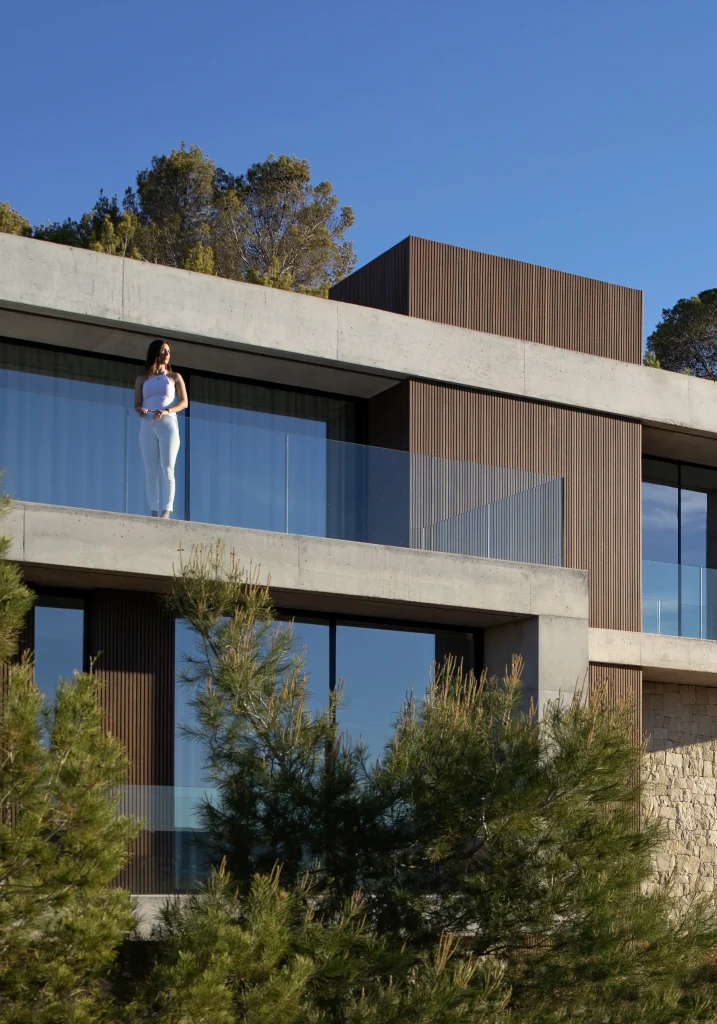
Taking part in the SOSTRE Forum provided an opportunity to share a reflection that also emerges from the studio’s everyday practice: every residential project represents an intervention in a specific place and therefore entails a responsibility towards the territory that receives it. Orientation, topography, vegetation, existing features and the scale of the intervention are architectural decisions, but they also form part of a particular way of transforming the landscape.
The value of gatherings such as SOSTRE lies precisely in bringing different perspectives into dialogue. Architecture, urban planning, biology, public administration and citizens contribute complementary viewpoints to a problem that does not admit of single answers.
Thinking about housing through the territory means broadening the scale of the reflection. It means understanding that a house never ends at the boundaries of its plot and that the decisions we make today gradually contribute to shaping the landscape we will inhabit tomorrow.