Inhabiting the Mediterranean · Nuestra Arquitectura CTAA Series
Inhabiting the Mediterranean is not simply about a particular image or architectural language. It means working with specific conditions of light, climate, topography, vegetation and landscape, but also with a culture in which the boundaries between indoors and outdoors are part of everyday life.
With this idea as a starting point, on 17 April 2026 Benissa hosted “Inhabiting the Mediterranean. Four Perspectives, Two Generations”, a new session of the Nuestra Arquitectura series organised by the Colegio Territorial de Arquitectos de Alicante (CTAA).
The event brought together Pascual Giner, Pasqual Giner, Pepe Giner and Reme Giner and offered a journey through different approaches to Mediterranean architecture developed across two generations. The session provided an opportunity to share projects, experiences and ways of understanding the profession which, despite starting from different trajectories, share the same territory as a point of reference.
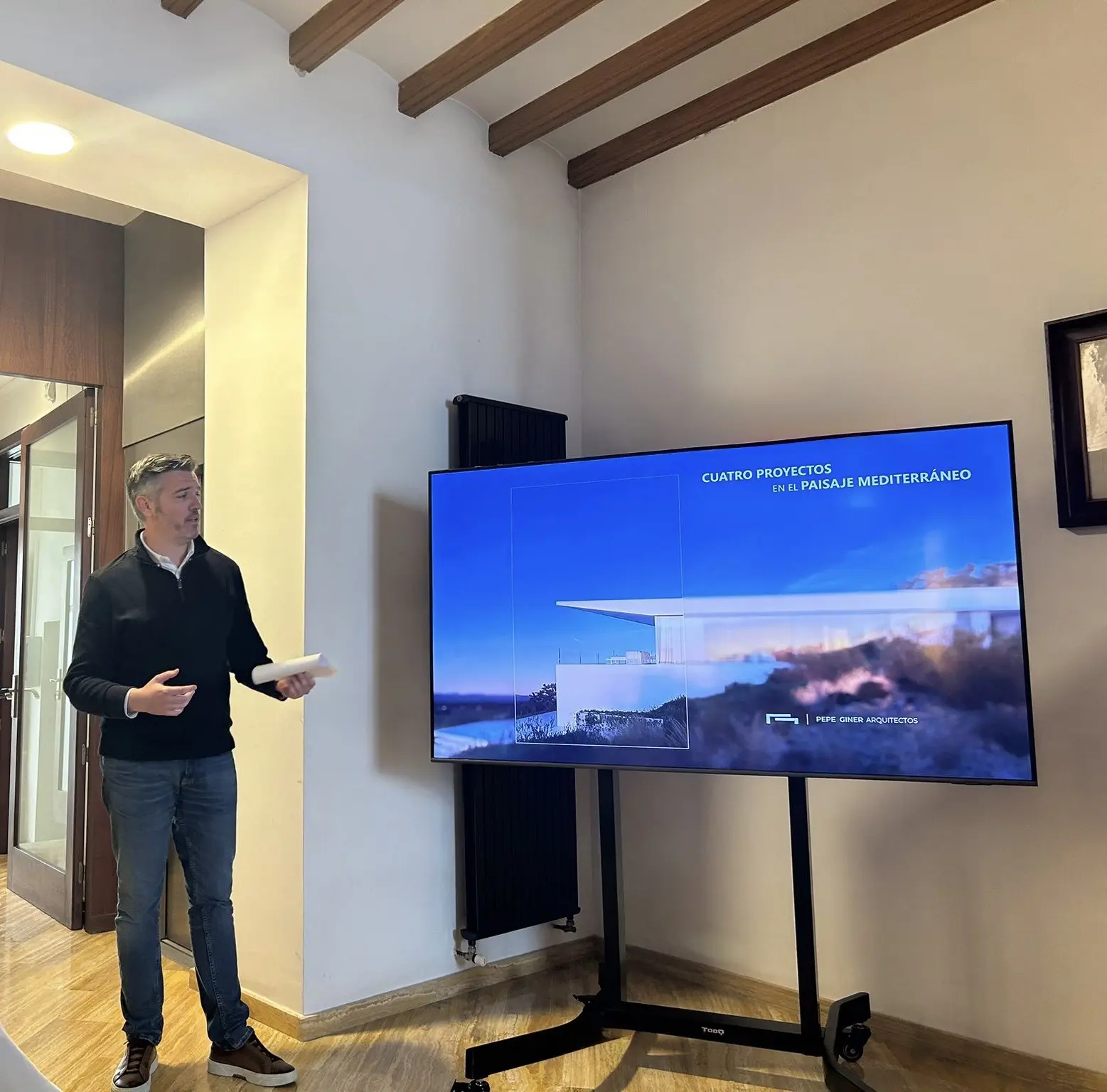
During his presentation, Pepe Giner introduced four recent projects by Pepe Giner Arquitectos: CTZ2 House and ARG House, both completed, and CSA and MRT, currently under construction. Rather than presenting them as a sequence of independent works, the presentation used them as four approaches to recurring questions within the studio’s work: how to establish a building in a place, how to relate to topography and how to create spaces that extend life towards the outdoors.
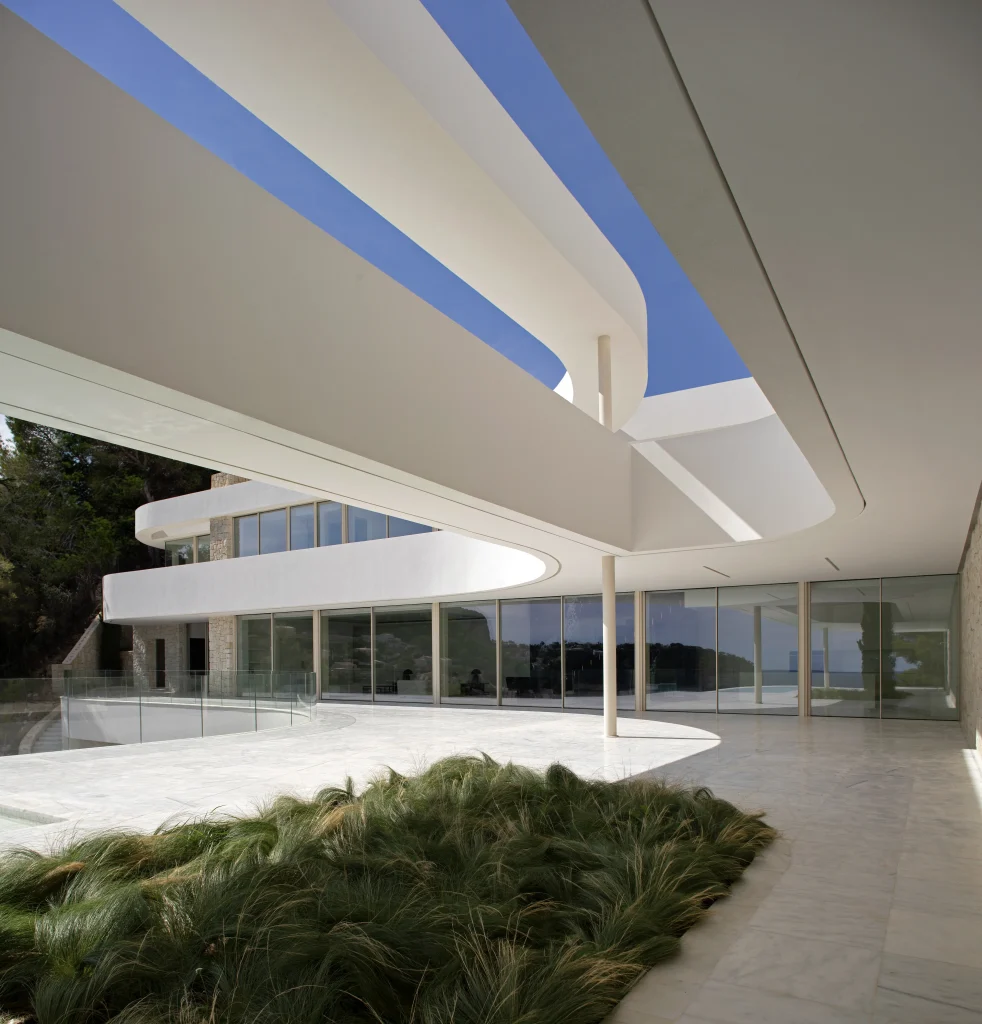
CTZ2 House provided an opportunity to discuss a home that emerged directly from a steeply sloping plot overlooking Portitxol Bay. Its sinuous platforms follow the terrain and open towards the horizon, making the relationship between architecture, terrace, pool, vegetation and the Mediterranean part of one continuous experience.
ARG House introduces a different condition. Surrounded by Mediterranean woodland and pronounced topography, the house seeks to raise its main areas in order to open views above the vegetation, while maintaining a material and physical relationship with the ground. Concrete, stone and timber contribute to this balance between precise geometry and a strongly present landscape.
CSA and MRT, still under construction, allowed the discussion to move towards the project and construction process itself. Both continue to explore questions related to site integration, orientation, the relationship between indoor and outdoor spaces, and the need to find a specific response for each site, avoiding the idea of Mediterranean architecture as a repeatable formula.

The four homes begin from different conditions and do not seek to offer a single answer. This is precisely where the value of presenting them together lies: understanding the Mediterranean not as a style, but as a context that requires observation, interpretation and decision-making.
The session also placed these projects within an intergenerational conversation. The title of the event itself — “Four Perspectives, Two Generations” — proposed an opportunity to observe how the same architectural culture can evolve, incorporate new tools and respond to new ways of living without losing its attention to place.
The Nuestra Arquitectura series, promoted by the CTAA in the Marina Alta, creates spaces for encounters where professional practice can be shared directly. The proximity between architects, built work and territory turns these sessions into an opportunity to discuss architecture through what truly shapes it: projects, their decisions and the specific conditions in which they develop.
For us, inhabiting the Mediterranean means continuing to observe a place before intervening in it. Understanding light, slope, views, vegetation and the way outdoor spaces are lived not as added elements, but as project materials. CTZ2, ARG, CSA and MRT are four different responses to the same question.